Daniel Whitmore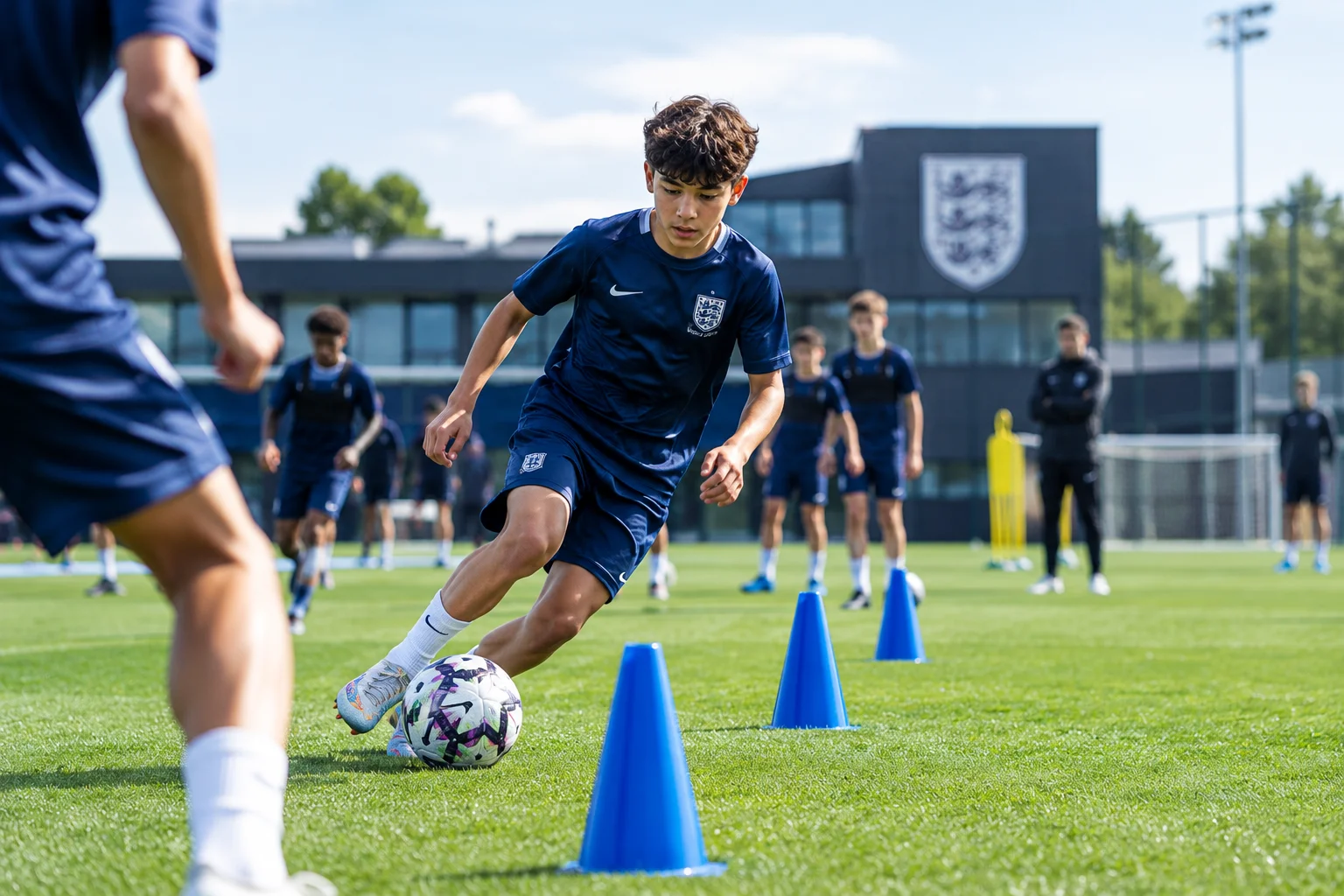
Almost every player in the Premier League spent years in a club academy before anyone outside football knew their name. The academy system is where professional footballers are made, and it is far larger, more organised and more selective than most supporters realise.
It is also where most young players’ dreams end. Understanding how it works means understanding both the success stories and the far larger number who never reach the first team.
What is a football academy?
A club’s youth development operation, taking players from as young as eight or nine and coaching them through to the age at which they either become professionals or leave.
Academies are organised into age groups, each with its own coaches, fixtures and training schedule. Players progress through the groups year by year, and at each stage the club decides whether to keep them or release them. By the time a player reaches the under-eighteens or under-twenty-ones, he is being judged on whether he can play for the first team.
The largest academies have well over a hundred players across all age groups at any one time.
How are young players found?
By scouts watching grassroots football, and increasingly through trial days and links with local schools and clubs.
Clubs employ scouts to watch junior matches across their region, looking for children who stand out. A promising player is invited to train with the academy and, if he impresses, offered a place. Larger clubs also run development centres for younger children, feeding the academy from an even earlier age. Competition for the best young players is intense, and clubs go to considerable lengths to sign them first.
Most academy players are recruited between the ages of eight and twelve, though clubs continue to sign players throughout the age groups.
What do clubs look for at each age?
Different things, and this is where much of the skill lies.
With the youngest players, clubs look for technique, coordination and an obvious enjoyment of the game. Physical size matters little, since children grow at different rates and early developers often fade. Through the middle age groups, decision-making and understanding of the game become more important, alongside technique. By the oldest groups, clubs are assessing whether a player has the physical and mental qualities to compete with adults.
The best academies try not to judge too early. Plenty of players who looked ordinary at twelve were exceptional at sixteen, and plenty of early stars never developed further.
Why do so few make it?
Because the numbers are brutal.
A large academy might take in dozens of players at the youngest age and produce one or two first-team players from that intake, if it is lucky. Most are released along the way, at each age group, as the club narrows the squad to those it believes have the best chance. Even players who reach a professional contract often never play a first-team match, and many drift down the divisions or out of the game entirely.
The reasons vary. Some do not develop as hoped. Some are unlucky with injury or timing. Some are simply behind another player in the same position. And some lose interest as the demands increase.
What happens to players who are released?
Increasingly, the clubs try to help, though it remains a difficult moment.
Being released from an academy, particularly in the teenage years, can be devastating for a young player who has built his identity around football. Clubs now provide education alongside training, so released players have qualifications to fall back on, and many offer support with finding another club or a route into a different career. Some released players sign for smaller clubs and work their way back up. Others leave the game.
The system has been criticised for the number of young lives it disrupts, and the support offered has improved considerably in response.
How do loans fit in?
They are the bridge between the academy and the first team, and clubs use them carefully.
A player who has outgrown academy football but is not yet ready for the first team is often loaned to a smaller club, where he plays regular competitive matches against adults. The loan tests whether he can handle the physical and mental demands of senior football, and gives the parent club evidence it cannot get from youth matches. Some players return from loan ready for the first team. Others are sold to the club they were loaned to, or elsewhere.
Managing that stage well is one of the things that separates academies that produce first-team players from those that produce only prospects.
Why do clubs invest so much in it?
Money, mostly, and identity second.
A player developed through the academy costs a club almost nothing compared with buying an equivalent player on the transfer market. A single academy graduate who becomes a regular first-team player, or who is sold for a large fee, can pay for the entire academy for years. That arithmetic is why clubs spend heavily on facilities, coaching and recruitment at youth level.
The identity argument matters too. Supporters have a particular affection for players who came through the club’s own system, and an academy that regularly produces first-team players becomes part of what the club stands for.
Does the academy shape how a club plays?
At the best-run clubs, yes, deliberately.
Academies that produce first-team players tend to coach every age group in the style the first team plays, so that a player arriving in the senior squad already understands the system. That continuity is one reason home-grown players often settle faster than signings. It also means that when a club changes its first-team approach, the academy has to change with it, which can take years to work through the age groups.
How has the system changed?
It has become more professional, more regulated and, for the biggest clubs, much more expensive.
Academies are now categorised and inspected, with standards for coaching, facilities and education that clubs must meet. The best-resourced clubs have full-time staff for every age group, sports scientists, analysts and education officers. Smaller clubs cannot match that and sometimes lose their best young players to larger academies as a result.
For what those players go on to do, our piece on why Premier League midfielders matter looks at one of the positions academies most struggle to produce.
For supporters, the practical upshot is patience. The academy player who breaks into the first team at nineteen is the exception. Most who make it take longer, via loans and setbacks, and the ones a club is proudest of are often those it nearly released.
Frequently asked questions
At what age do players join football academies?
Most are recruited between eight and twelve, though clubs continue signing players through the older age groups.
How many academy players become professionals?
Very few. A large academy may produce one or two first-team players from an intake of dozens, and many who reach a professional contract never play a first-team match.
What happens to players released from academies?
Clubs now provide education and support with finding another club or career. Some sign for smaller clubs and work back up; others leave the game.