Daniel Whitmore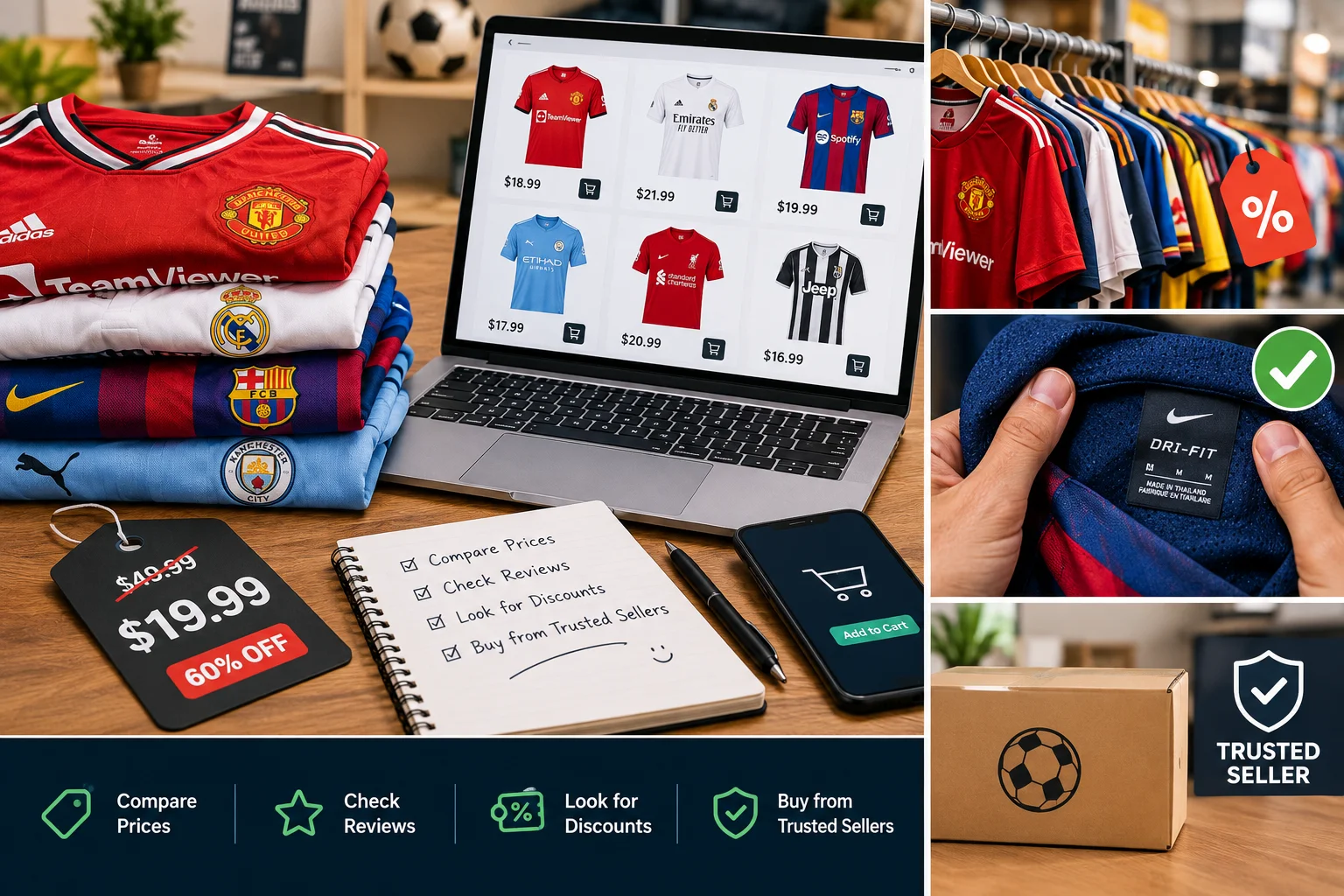
A football jersey is polyester, stitching, a crest and a sponsor print. The cost of making one is not high and not a mystery. Yet prices range enormously, and a cheap jersey can be anything from a near-identical replica to something that falls apart by Christmas. The difference is not the price. It is the seller, and knowing what to look for turns a gamble into a sensible purchase.
What are you actually paying for?
Mostly not the jersey.
The largest part of an official shirt’s price is licensing and the commercial arrangements behind the kit, not materials. A manufacturer pays the club for the right to make and sell the shirt, the club sells the sponsorship, and retail pricing has to support all of that before it reaches the person who made the garment. The polyester, the stitching and the crest are a small fraction of the total.
That gap is why the replica market exists. A well-made replica uses comparable fabric and construction and reaches you for far less, because it does not carry the licensing cost. Anyone buying cheap football jerseys is declining to pay that premium, which is a fair thing to do and a separate question from quality.
What does cheap give up?
Sometimes nothing meaningful; sometimes a great deal. The variation is between sellers, not price brackets.
At the poor end you find heat pressed crests that lift within months, fabric light enough to show shadow through it, sparse stitching that fails at the hem, and colour that misses the intended shade. At the good end you find a jersey hard to tell from an official one at conversational distance, which survives a season of washing and cost a fraction of the price. Both exist at similar prices, which is why the seller matters more than the number.
How do you spot a good one?
Three checks, all possible from a listing.
The crest first: embroidered or properly bonded crests last years, while heat pressed badges lift at the corners within months. A seller who photographs the crest close up is confident about it. The stitching next, at the hem and cuffs, which take the most stress — even and dense is what you want. And the fabric texture, visible in a close-up, where a well-made jersey shows structure and variation rather than a uniform flat surface.
A listing made entirely of flat renders with no detail shots and no measurements is asking you to buy on trust. That absence is information in itself.
How do you get the size right?
Measure a jersey you already own, which removes most of the risk.
Lay it flat, measure armpit seam to armpit seam, and match that half chest figure to the seller’s chart rather than the size letter, since football sizing does not match high street sizing and varies between makers. If you are buying a player version rather than a replica, size up, because they are cut considerably closer and use separate charts.
Replica or player version?
The replica, for almost everyone, and it is usually the cheaper of the two anyway.
The replica is cut with room, built to survive repeated washing, and comfortable to wear for a few hours. The player version is lighter, tighter and built for playing rather than watching, with more aggressive ventilation and often bonded seams. For anyone not actually playing in it, the replica is the right choice: more comfortable, more durable and more forgiving on sizing. The performance advantages of the player version mean nothing in a stand or a pub, and the tighter cut makes it less flattering on most people.
Does the season affect the price?
More than anything else you control.
New kits arrive in summer at full price and hold it through autumn, with reductions starting after the new year and becoming serious in spring. The same jersey moves a long way across twelve months without changing at all. That makes last season’s jersey the best value on the market at almost any point: twelve months old, near indistinguishable to anyone not studying the collar, and considerably cheaper.
What gets added after the price?
Enough to change the comparison.
Shipping is often charged per item, so consolidating purchases can save more than a discount code. Printing adds cost and removes your right to return the jersey. And if it ships from outside the UK, duty and a courier handling fee may arrive after delivery, which can close the gap between a cheap listing and an expensive one entirely. The cheapest listing is not always the cheapest purchase.
Should you buy a full kit or just the jersey?
The jersey, for most people.
A full kit adds shorts and socks, and shorts are sized on the waist rather than the chest, so a kit sold in a single size assumes both measurements fall in the same place on the chart. For plenty of people they do not, and the result is shorts that are wrong in a set where the jersey is right. Buying the pieces separately costs marginally more and fits considerably better. Socks are also the first thing to wear through in any kit that gets played in, so budgeting to replace them is sensible regardless.
For a child, the same applies, with the added point that kids’ kit is sized by height rather than age, and the height figure on the listing is far more reliable than the age band.
What a fair price looks like
Considerably less than a club shop and considerably more than the very cheapest listings, which are cheap for reasons that show up in the crest and stitching within months. The reliable approach is to ignore the price for a moment, run the three checks, and compare prices only among the jerseys that pass.
Our Premier League shirts season guide covers what changes across the league’s kits each year, which helps you judge whether a given season’s jersey is worth having.
The short version: judge the seller, not the price. A cheap jersey from a careful seller can match an expensive one; a cheap jersey from a careless one shows it within months. The three checks cost nothing and separate the two.
Frequently asked questions
Are cheap football jerseys lower quality?
Not automatically. Price differences are driven largely by licensing rather than materials, and a well-made replica uses comparable fabric and construction. The variation that matters is between good and bad sellers.
How do I spot a good cheap jersey?
Check the crest attachment, the stitching at the hem and cuffs, and the fabric texture in close-up photographs. These predict quality regardless of price.
When is the cheapest time to buy a football jersey?
Late spring, as sellers clear stock before the next release. Buying the previous season’s jersey at any point is usually cheaper still.