Jesse Hall

The Importance of Home Advantage
Home teams win more matches than away teams. That has been true for as long as football has kept records, in every league and at every level, and it remains true in the Premier League today. The margin has narrowed over the decades, but it has never disappeared, and a side that cannot win at home rarely finishes where it hopes to.
Why home advantage exists is less obvious than the fact that it does.
How big is home advantage in the Premier League?
Meaningful, and consistent enough to plan around.
Across a typical season, home sides win somewhere around forty-five per cent of matches, away sides around thirty per cent, with the rest drawn. The exact figures move from year to year, but the gap between home and away wins has been present in every season the league has played. For a club, that means the home fixtures are where the bulk of the points are expected to come from, and a poor home record almost always means a poor season.
The advantage also shows in margins. Home sides score more, concede fewer and recover from going behind more often than away sides do.
Where does the advantage come from?
Several sources, and researchers have spent decades trying to separate them.
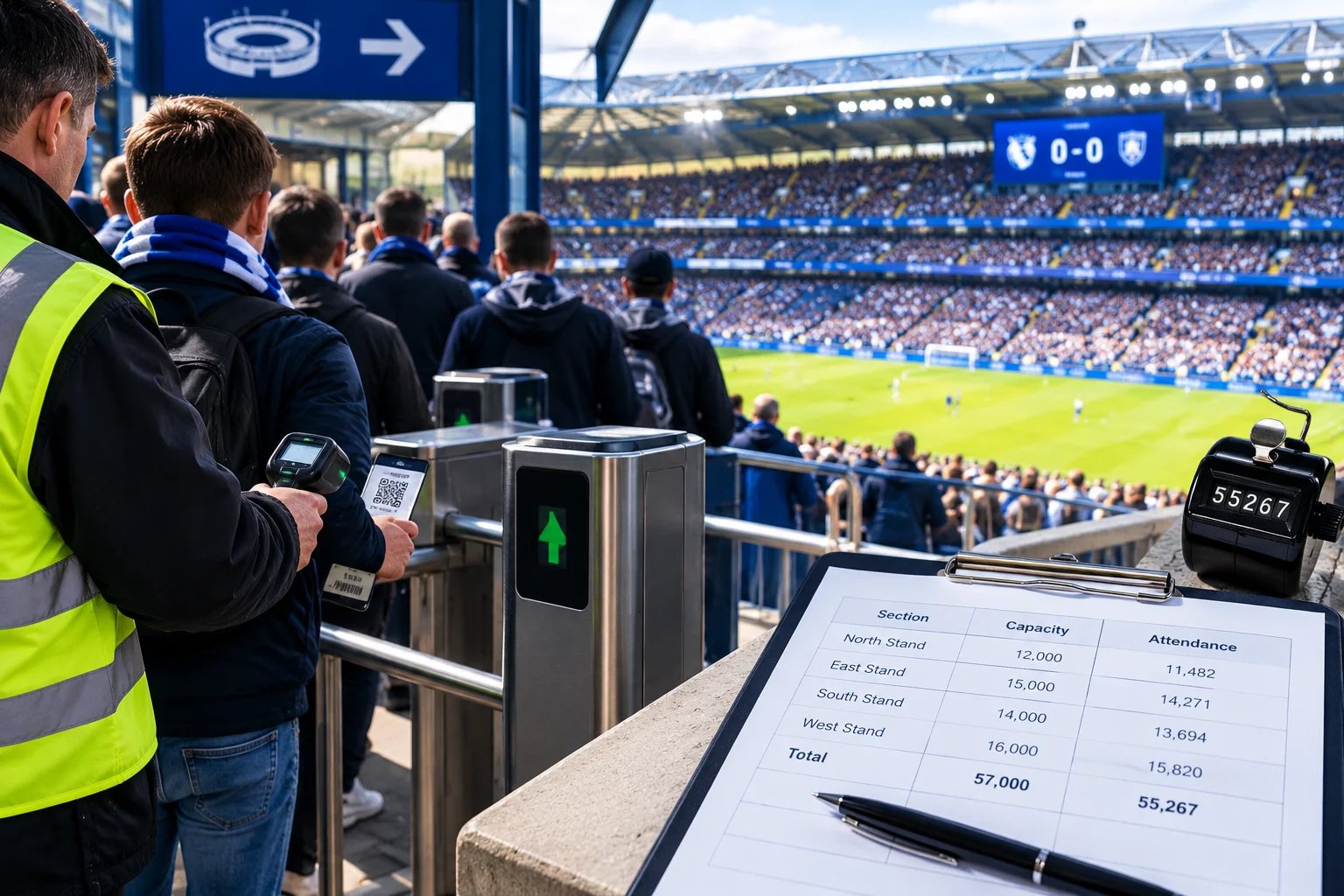
The crowd is the most obvious. Playing in front of your own supporters lifts players and puts pressure on opponents, and the noise makes communication harder for the away side. Familiarity matters too: home players know the pitch, the dressing room, the routine, and have not spent the morning travelling. Travel itself takes a toll, particularly for midweek matches and long distances.
There is also evidence that referees are influenced, usually without knowing it, by a home crowd. Decisions on marginal fouls, bookings and added time have been shown to lean slightly towards the home side across large samples of matches.
Has home advantage weakened?
Yes, gradually, over several decades.
The gap between home and away results was wider in earlier eras than it is now. Better travel, better preparation, more professional approaches to away matches and more consistent pitches have all reduced the disadvantages of playing away. Television has also changed the character of crowds at some grounds, with more neutral and occasional spectators and less of the hostile atmosphere that once made certain stadiums feared.
The clearest demonstration came when matches were played in empty stadiums. Home advantage shrank dramatically without crowds, which settled the long argument about how much of it the supporters were responsible for.
Does it vary between clubs?
Considerably, and that variation is where the interesting detail lies.
Some grounds are genuinely harder to visit than others, because of the atmosphere, the pitch, the design of the stadium or simply the club’s history of winning there. Opponents arrive expecting to lose, which does not help them. Other grounds offer little advantage at all, either because the crowd is quiet or because the stadium is built in a way that keeps supporters distant from the pitch.
A club’s home record is partly about the team and partly about the ground. The best-run clubs work on both.
Do players experience it differently?
Yes, and the difference is partly physical.
Playing at home means sleeping in your own bed, following your usual pre-match routine and walking into a dressing room you know. Playing away means a journey, a hotel, an unfamiliar ground and a crowd that wants you to fail. Those things add up. Studies have found that players’ bodies respond differently before home and away matches, with measurable differences in stress and readiness.
Confidence plays a part too. Players who have won at a ground before expect to win there again. Players who have lost there repeatedly carry that into the match. Some away grounds acquire a reputation among visiting players that becomes a disadvantage in itself.
Is there a disadvantage to playing at home?
Occasionally, and it shows in a specific situation.
A home side that is expected to win, playing in front of an impatient crowd, can tighten up if the first goal does not come. The pressure that lifts a home team when it is winning can weigh on it when it is not, and a nervous crowd makes players nervous. Away sides that defend well and silence the ground can turn home advantage into something closer to a burden. The clubs that handle this best are the ones whose supporters stay patient, which is itself a kind of home advantage.
How do teams use it?
By treating home and away matches as different problems.
Managers often set up more ambitiously at home, where the crowd expects attacking football and the players feel confident, and more cautiously away, where a draw is a reasonable result. The fixture list is studied for runs of home matches, which are where a team hopes to build momentum, and runs of away matches, which are where seasons are most often damaged.
Promoted clubs and sides fighting relegation lean on home advantage most heavily. A struggling team that can make its ground difficult to visit has a route to survival that does not depend on winning away.
What about neutral venues?
Cup semi-finals and finals at neutral grounds remove the advantage almost entirely, which is partly why they feel so different.
With neither side at home, the crowd is split, the ground is unfamiliar to both, and the routine is disrupted equally. Results at neutral venues are closer to a coin toss than ordinary league matches, and underdogs win them more often than their league form would predict. That is also why a cup draw that keeps a lower-division side at home for the early rounds is worth so much to them.
Why does it still matter?
Because the margins at the top and bottom of the table are small, and home advantage is one of the few consistent edges available.
A side that wins its home matches and draws away will finish comfortably in the top half. A side that loses at home, even while picking up occasional away wins, will be in trouble. Over a thirty-eight game season, the difference between a strong and a weak home record is often the difference between European football and a relegation fight.
Our piece on why set pieces win Premier League matches covers another of those consistent edges. And for the fixtures where home advantage carries the most emotional weight, our look at why derbies mean more explains the difference.
The practical point for anyone reading a league table is simple. Look at the home and away columns separately. A club’s position tells you less than the split does, and a side with a strong home record and a poor away one is usually a different kind of team from one with the reverse, even if they sit level on points.
Frequently asked questions
Why do home teams win more often?
A combination of crowd support, familiarity with the ground and routine, the absence of travel, and a slight lean in marginal refereeing decisions towards the home side.
Is home advantage still significant in the Premier League?
Yes. It has weakened over the decades, but home sides still win noticeably more often than away sides, and a poor home record almost always means a poor season.
Did empty stadiums affect home advantage?
Dramatically. When matches were played without crowds, home advantage shrank sharply, which showed how much of it depends on supporters being present.


 Daniel Whitmore